The Foundational Stage at MIT Vishwashanti Gurukul School, provides a joyful and nurturing learning environment where young children learn through play, exploration, interaction and meaningful experiences. Our approach is aligned with the principles of the National Curriculum Framework for the Foundational Stage, focusing on the holistic development of every child.
Learning Through Play and Exploration
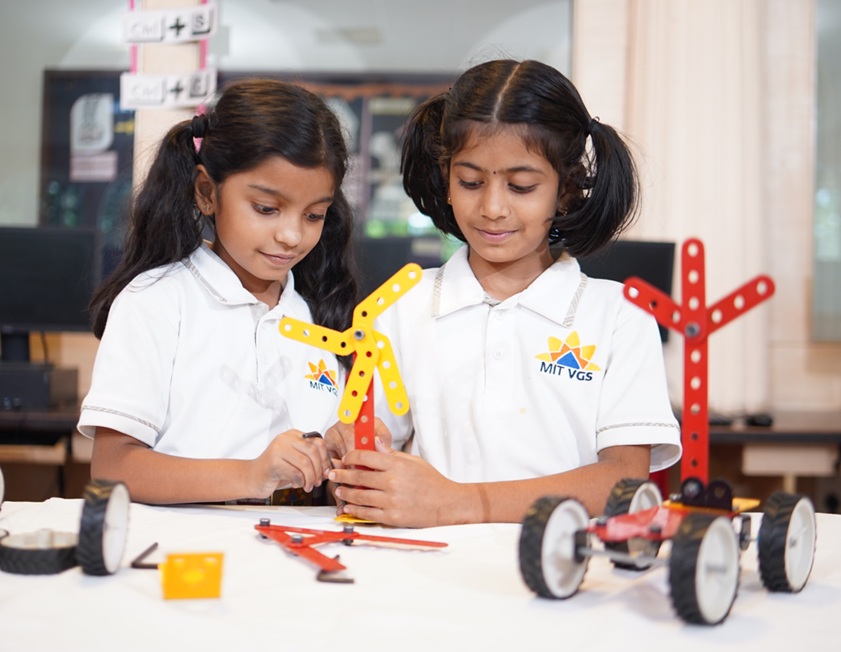
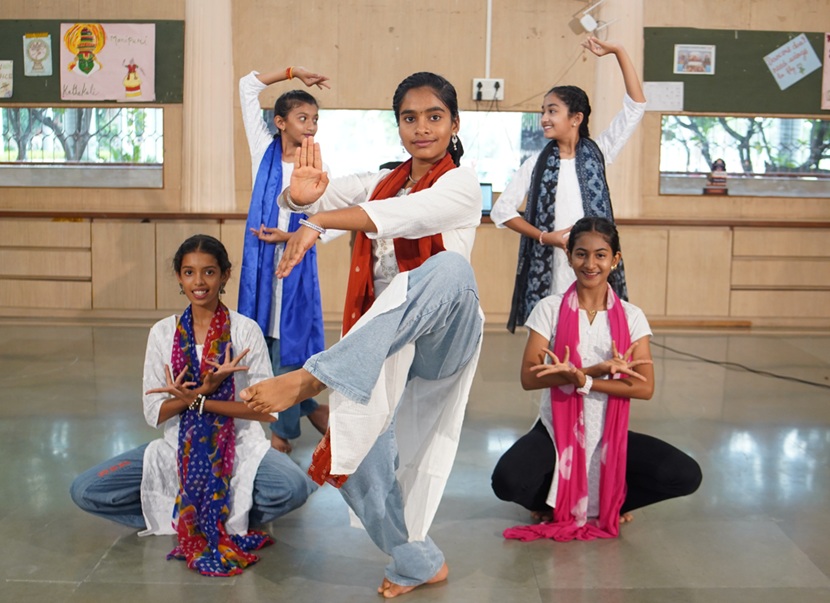
Children learn best when they are actively engaged. Our classrooms encourage children to explore, observe, communicate, create and participate through age-appropriate activities, stories, games, art, music, movement and hands-on experiences.


The Preparatory Stage at MIT Vishwashanti Gurukul School, builds upon the foundations developed during early childhood. Learning becomes progressively more structured while remaining engaging, experiential and connected to children’s everyday experiences.
The NCF framework identifies areas such as languages, mathematics, understanding the world around us, arts, physical education and productive/vocational experiences as important components of learning during this stage.
Building Strong Academic Foundations
Students develop conceptual understanding through classroom discussions, activities, projects, experiments, observation and inquiry. The emphasis is on understanding why and how, rather than simply memorising information.


The Secondary Stage at MIT Vishwashanti Gurukul School, focuses on deeper conceptual understanding, critical thinking, application of knowledge and preparation for future academic pathways. Students engage with a structured CBSE curriculum while developing the skills, confidence and independence required for higher education and life beyond school.
CBSE’s current Secondary Curriculum includes languages, Mathematics, Science and Social Science along with opportunities for vocational education, computational thinking and AI, art education, physical education and other subjects/options.
A Strong Academic Foundation
Students develop subject knowledge through classroom learning, practical activities, projects, discussions, research and application-based tasks. The focus is on developing competencies that enable students to understand concepts and use their knowledge effectively.